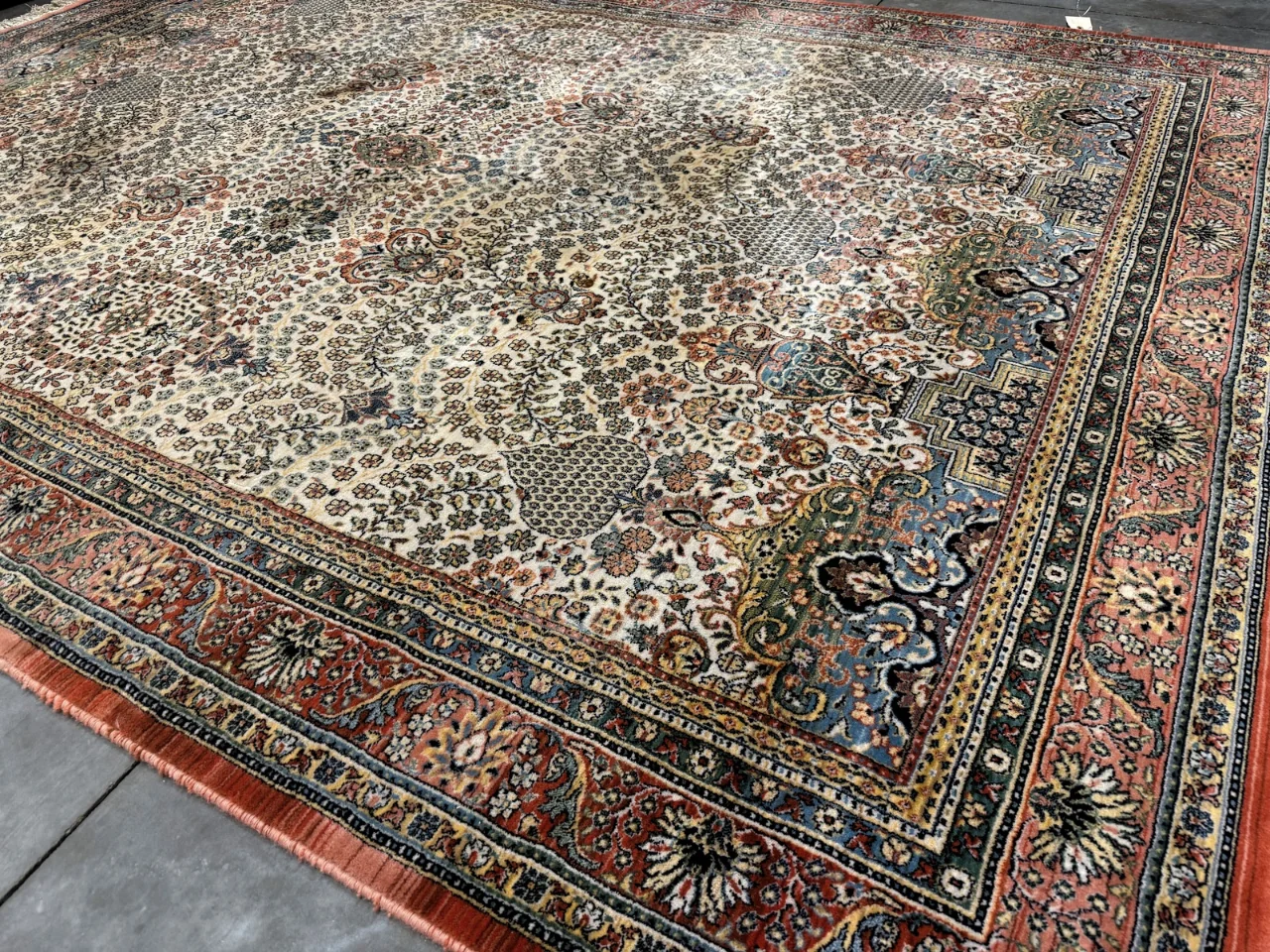
Wool-Viscose Rug Cleaning in Happy Valley, OR
A designer wool-viscose rug with heavy pet staining. 21.4 ounces of dry soil came out, the yellow lifted and the odor was treated, with an honest word up front about what would not.
The Result in Four Lines
- The rug
- An 8×11 wool-viscose blend area rug from a Happy Valley, OR home.
- The problem
- Heavy, set-in pet stains that had bonded with the dye, plus odor, and bleached spots from an earlier cleaning attempt.
- What we did
- Dry soil extraction, a controlled wash with enzymatic treatment for pet urine, balanced pH, targeted stain treatment, then controlled drying.
- The result
- 21.4 ounces of dry soil removed. The yellow staining was largely gone, the odor was gone and the tone of the rug evened out. The bleached spots stayed bleached.
Before & What Came Out
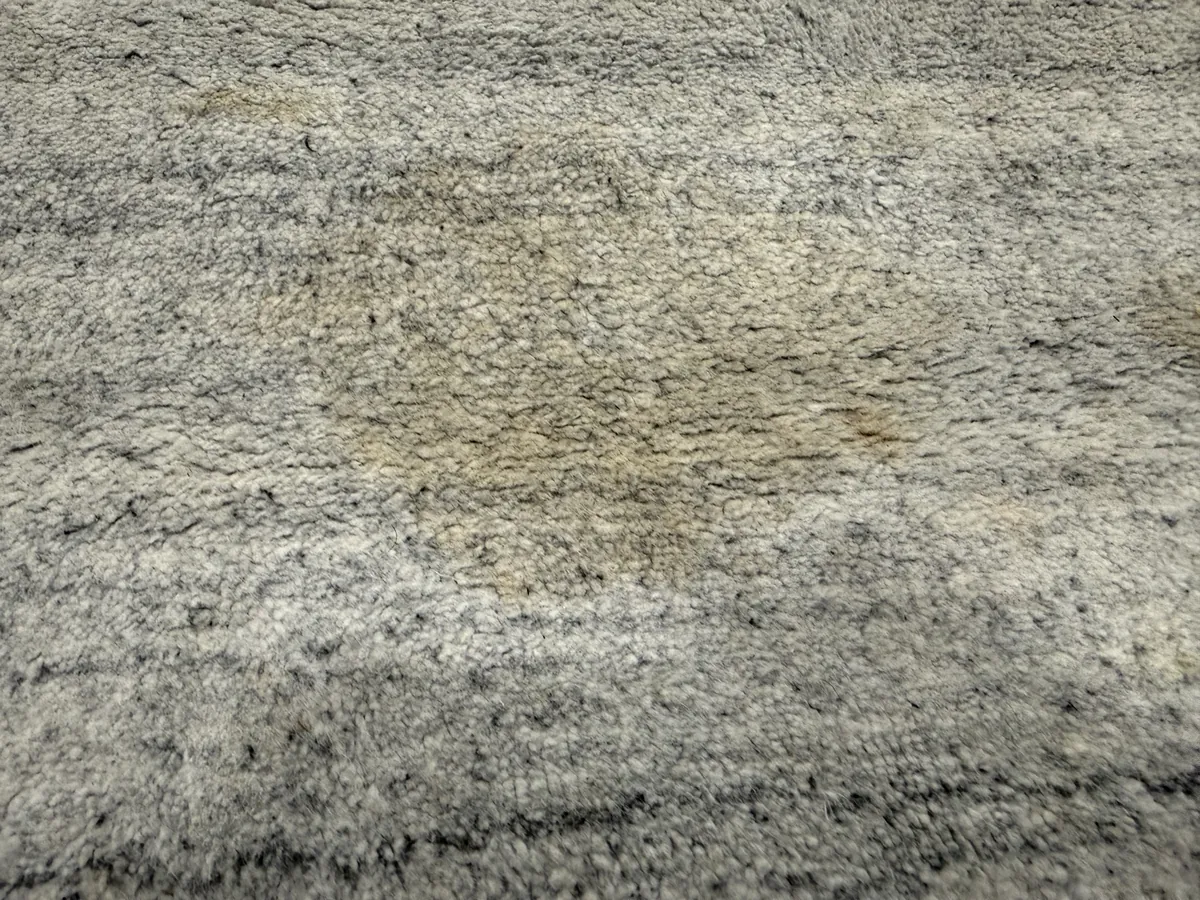
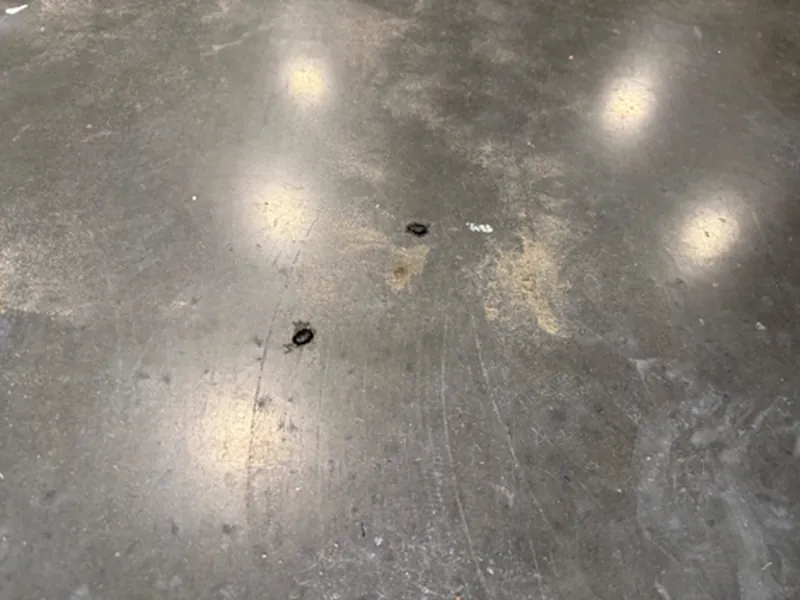
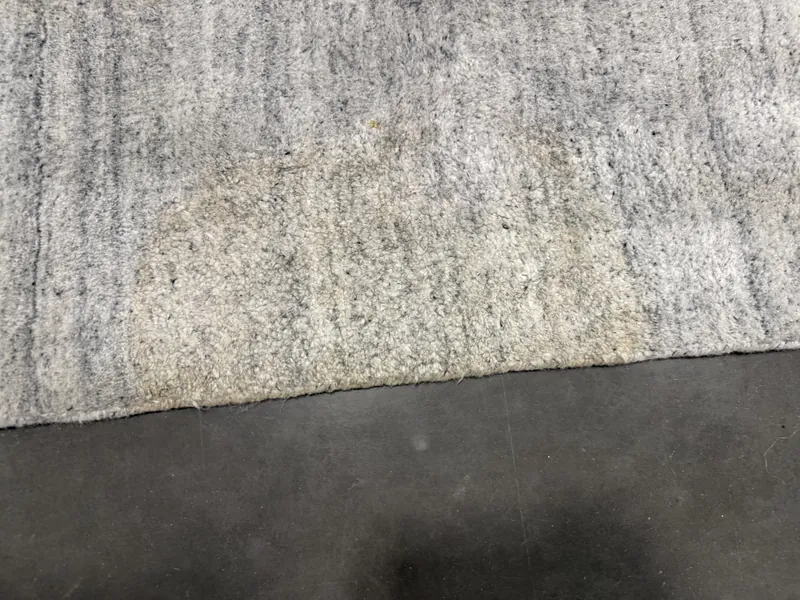
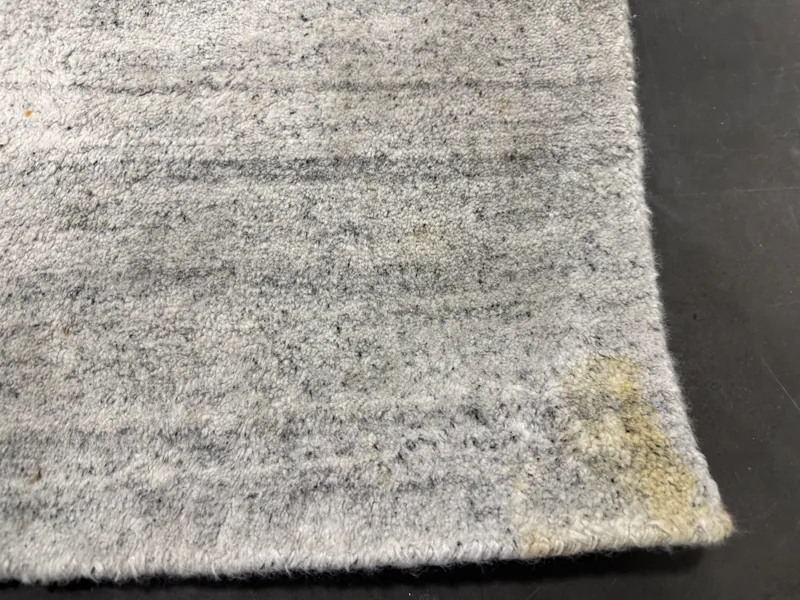
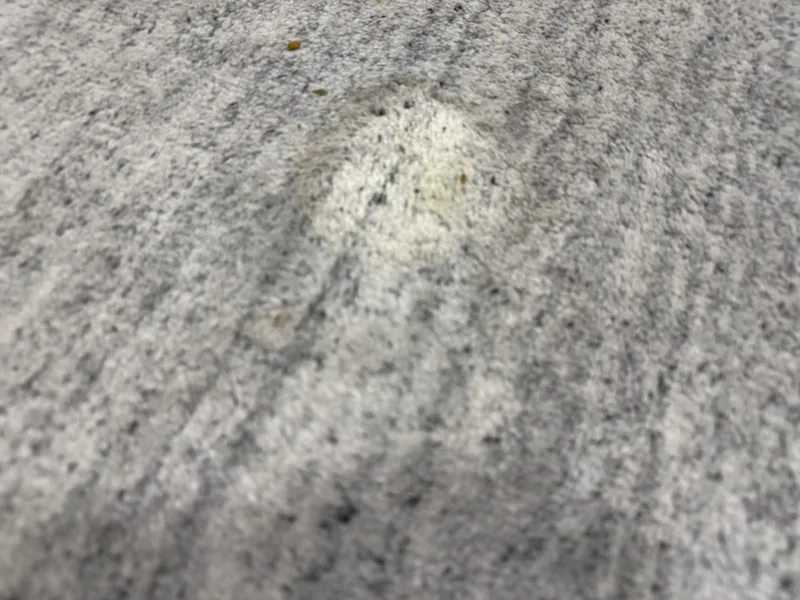
The staining as the rug arrived, and the dry soil we extracted from it before the wash.
What to notice
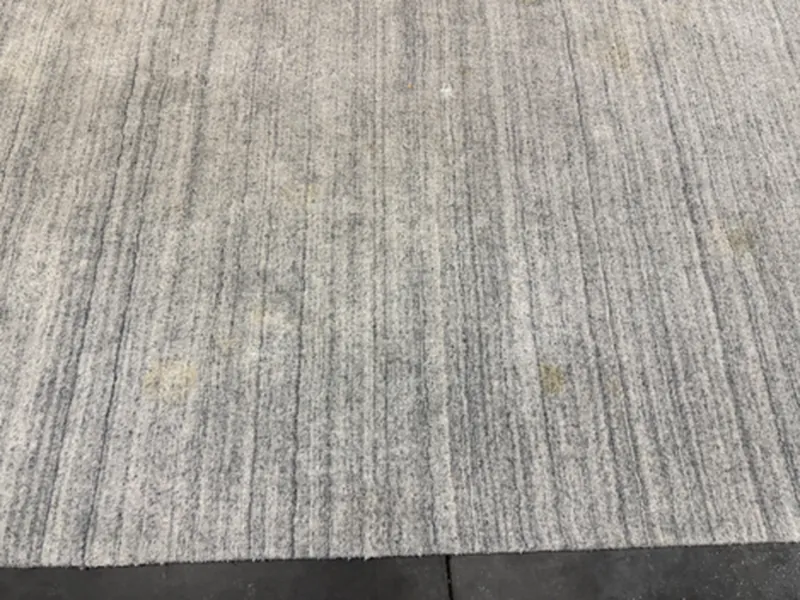
- The rug did not look filthy on the surface, yet 21.4 ounces of dry soil came out of the pile.
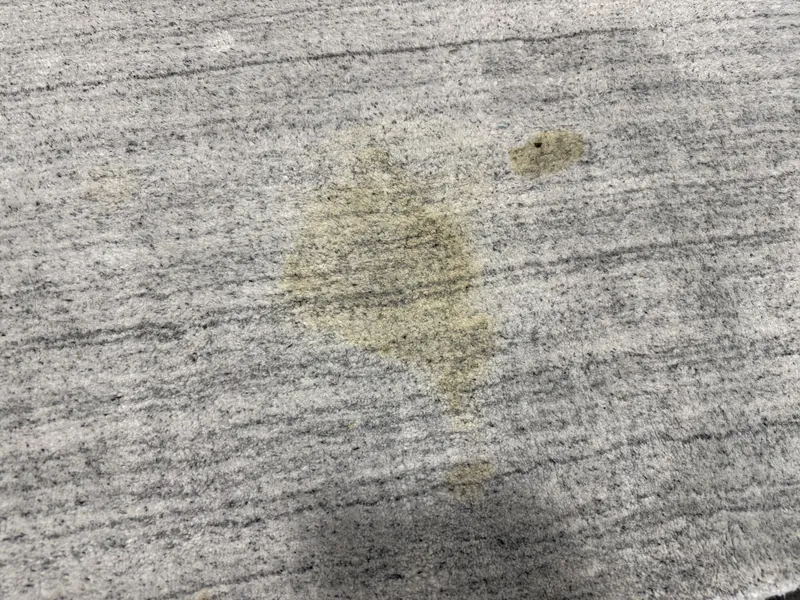
- The yellow stains are the classic pattern of repeat pet accidents. They had been there long enough to bond with the dye.
- The white, bleached-out circles are where an earlier cleaner removed the color. We pointed those out before we started.
The staining up close
At our plant, and after
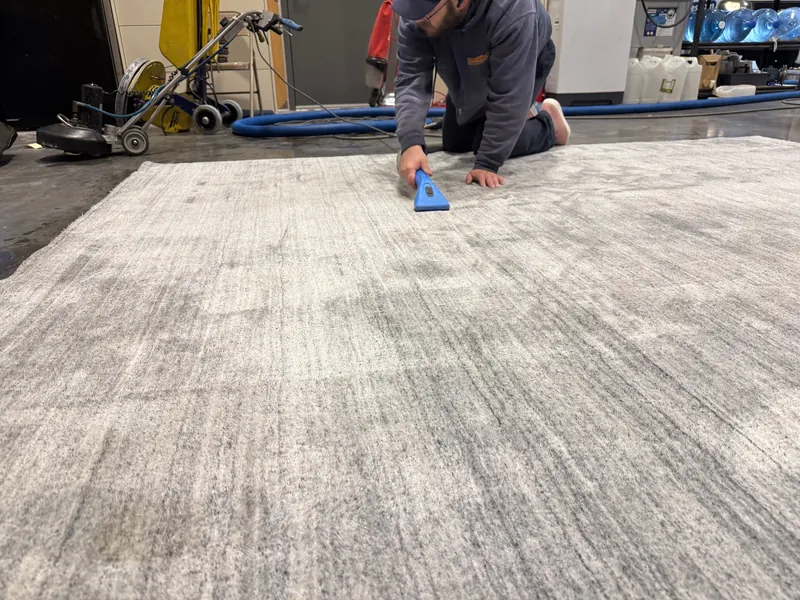
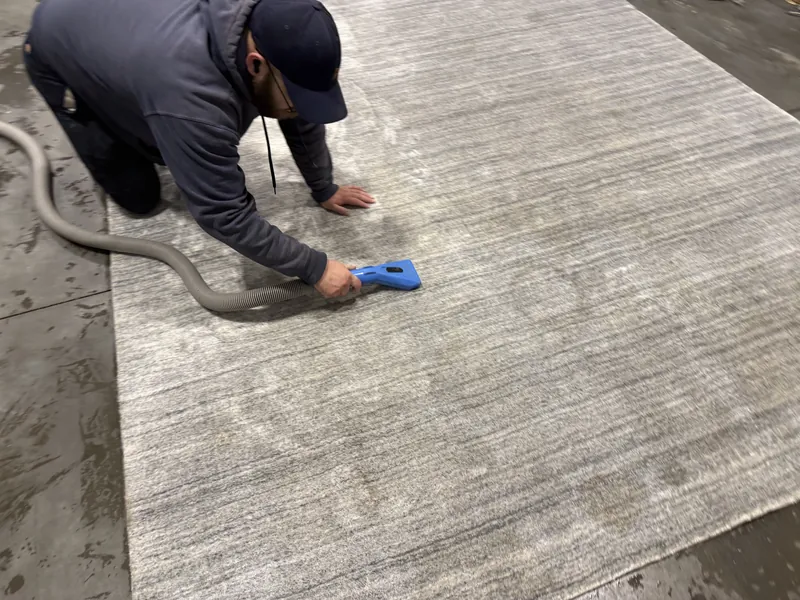
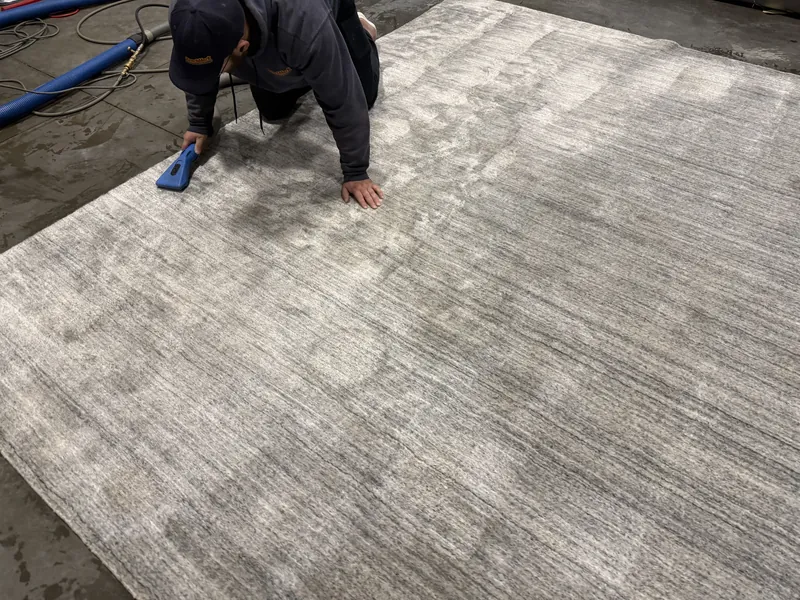
Watch it being cleaned
The Rug Proof Report for this rug
Every rug we wash goes home with a report: the dry soil weighed on our plant scale, photos, and what we did. This is the one for this project.
The Situation
Happy Valley sits just far enough outside Portland that the rain still has room to do its work. It falls often enough to keep the yards green and the dogs muddy, and whatever comes in on four paws usually stays wet longer than it should. That combination is hard on rugs, especially the good ones.
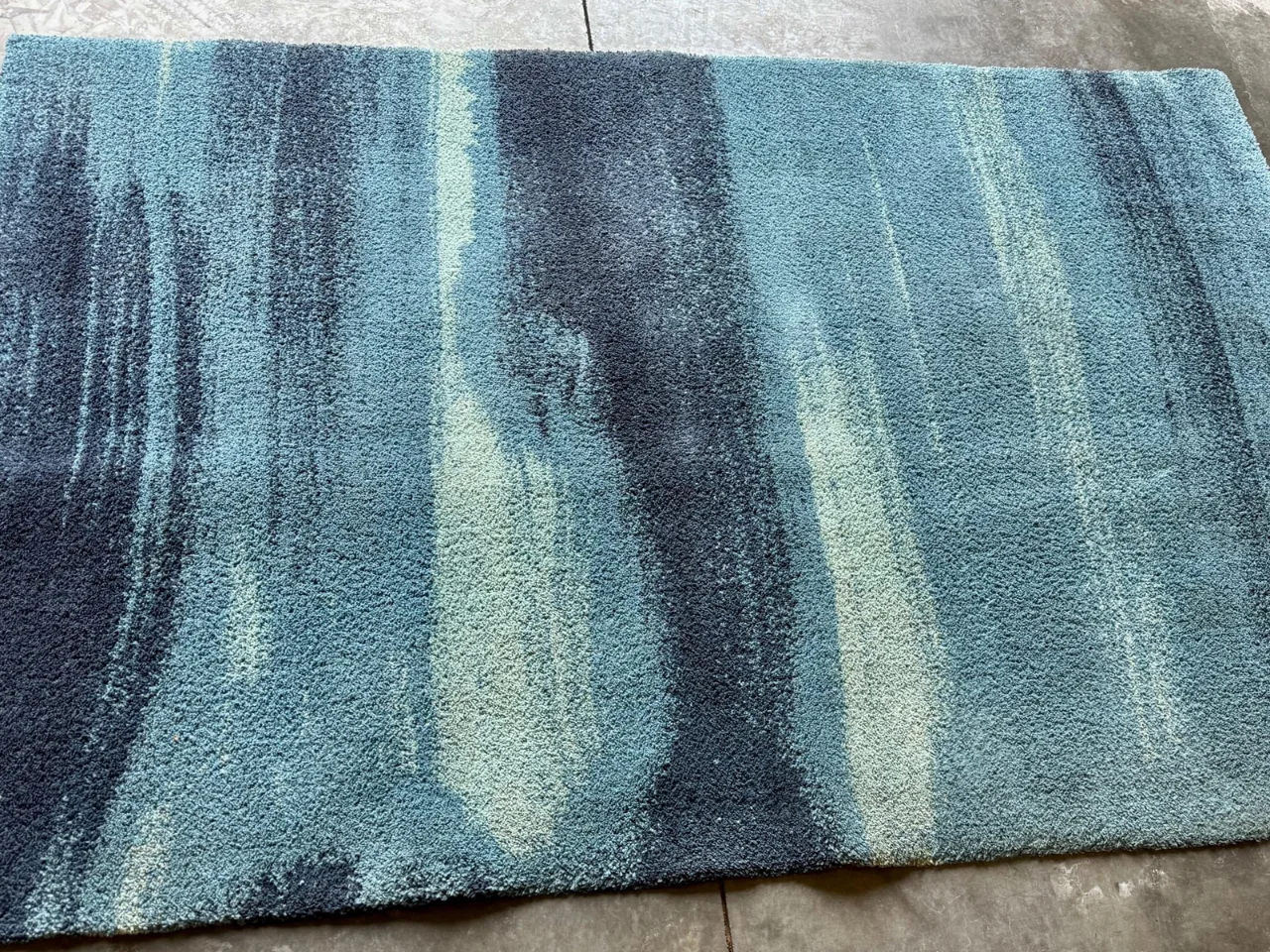
This one was a Restoration Hardware wool-viscose blend. Soft underfoot, quietly expensive, the kind of rug people put in a room they actually use. It arrived with heavy pet staining: yellowish, irregular, the classic map of a dog that has been there more than once.
What We Found
On the surface it did not look filthy. There was no thick layer of dry soil, and in that way it was a remarkably clean rug. The problem was deeper. The stains had been sitting long enough to bond with the dye. In a wool-viscose blend, that matters. Wool can hold odor in the fiber itself, and viscose, a plant-based fiber, does not love repeated moisture or aggressive chemistry.
Somewhere along the way, someone had also tried to clean the worst spots with something too strong. You could see the white, bleached-out circles where the color had simply given up. Those spots were not going to darken again, because the dye was gone.
We walked the rug and pointed it out the way you have to when the news is not perfect. A lot of the staining would come out and the odor would come out, but the bleached areas would stay bleached, and some of the dye still bonded to the urine would lift with the stain. The rug would look dramatically better. It would not look brand new. That is the honest version of the job.
What We Did
- 1
Dry soil extraction
Light dry soil extraction first, even when there is not much, so the later chemistry is not fighting dirt. We weighed what came out: 21.4 ounces.
- 2
Controlled wash with enzymatic treatment
Aimed specifically at the uric acid crystals that keep pet urine smelling even after the surface looks clean. In the Pacific Northwest, residual moisture and humidity can keep those crystals active, so they have to be broken down, not just rinsed.
- 3
Careful pH balance
We balanced pH so we would not push the remaining dye further or damage the viscose.
- 4
Targeted stain treatment
Extensive yellow stain removal treatments on the affected areas, by hand and with extraction.
- 5
Leave the bleached spots alone
No amount of skill puts color back once it has been oxidized out, so we did not try.
- 6
Controlled drying
The rug dried in our drying chamber.
The Result
When it dried, the difference was obvious. The yellow was largely gone. The odor was gone. The overall tone of the rug had lifted and evened out. The bleached circles remained, quiet reminders of the earlier attempt, but they no longer looked like active damage. They looked like part of the rug’s history. The soft hand, the quiet pattern and the way the light moves across the pile were intact.
Happy Valley’s weather makes this kind of job more common than people expect. Rain on the grass, wet paws on the threshold, a high-end rug that lives in a real house. Moisture sets stains faster, and humidity keeps odor alive if the chemistry is not right. A wool-viscose blend will reward careful, fiber-specific work and will punish the shortcut. This one got the careful version. It left cleaner, quieter and still recognizably itself, which is usually the best outcome a rug like this can ask for.
Care Tips for a Rug With Pets
- Blot accidents right away with a clean white cloth, pressing down rather than rubbing. Then call us before you reach for a cleaner.
- Keep bleach, strong cleaners and harsh spot removers off wool and wool-viscose. They can strip the dye and leave white spots that cannot be fixed.
- Vacuum with suction only, and rotate the rug every six months so wear is even.
About this write-up: The photos and the cleaning are real. Results depend on the rug, the fiber and how long the stains have been there, and small details are simplified to protect the family’s privacy.
By the Numbers
| Measure | This rug | How we know |
|---|---|---|
| Rug size | 8×11 (88 sq ft) | Stated in our write-up of this project |
| Dry soil removed | 21.4 ounces | Weighed on our plant scale after dusting and before the wash |
| Fiber | Wool-viscose blend | Identified at inspection |
| Delivery charge | $0 | Free pickup and delivery within 35 miles |
Questions About This Project
Can pet urine stains come out of a wool-viscose rug?
Often most of the staining and the odor can be treated, but it depends on how long the stain has been there and what has already been used on it. In this project the yellow staining was largely gone and the odor was treated. Spots that an earlier cleaner had already bleached stayed bleached, because color cannot be put back once the dye is gone.
Why do you remove dry soil before washing?
Dry soil sits deep in the pile and gets in the way of the wash. Mechanical dusting removes it first, so the cleaning solution can work on the stains instead of fighting dirt. Even though this rug did not look very dirty on the surface, 21.4 ounces of dry soil came out before any water touched it.
Why are wool-viscose rugs harder to clean?
Wool can hold odor in the fiber itself, and viscose, a plant-based fiber, does not like repeated moisture or aggressive chemistry. The cleaning has to be fiber-specific, with balanced pH and careful drying, rather than a single strong treatment.
Will my rug look brand new afterward?
Not always, and we tell you that up front. We walk the rug with you, point out what should come out and what will not, and set expectations before we start. The goal is a rug that looks dramatically better and smells clean, and still looks like your rug.
Do you pick up rugs in Happy Valley?
Yes. Pickup and delivery are free in Happy Valley, OR, which is inside our 35-mile free zone. Call (503) 285-9693 or use the form below.
Photos and details are from a real Benchmark project. Last updated November 23, 2026.
Get Your Free Quote
Tell us a little and we will confirm your pickup window. We reply during business hours, Monday to Friday, 8 AM to 5 PM.
Thank you! We received your request.
We will reach you during business hours. Need us sooner? Call (360) 696-4418.
More Rug Case Studies
Heirloom 8×10 Silk Rug Cleaning
Shag Wool Rug Cleaning in Camas